Ravioli, tortelli, tortellini: which is which
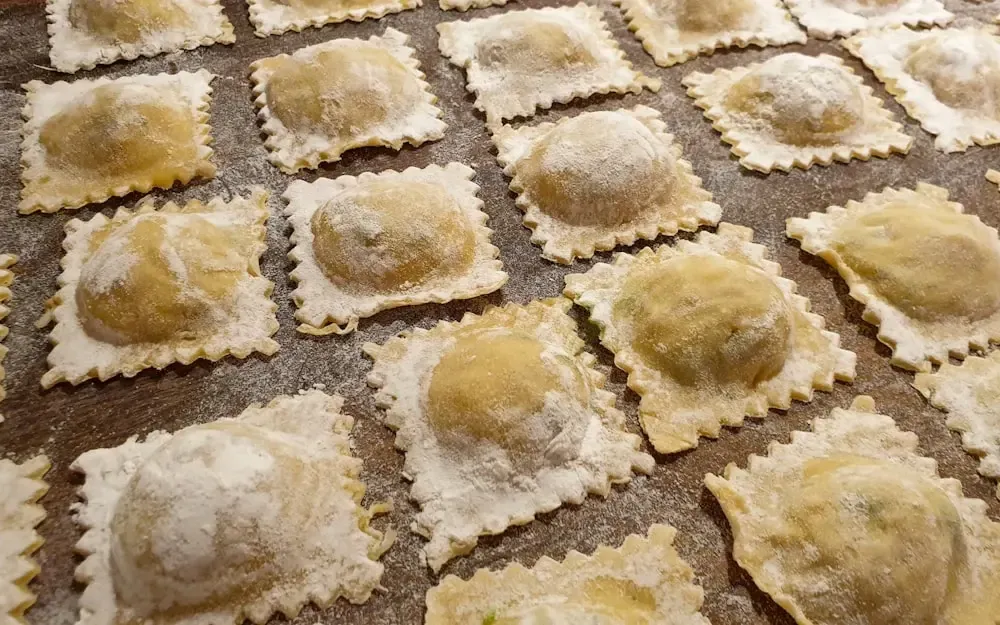
These three get confused constantly, and the confusion is understandable because two of them are nearly the same word. Ravioli is the general Italian term for a flat filled parcel sealed between two sheets, usually a square of about 4 to 5 cm. Tortelli is what the same idea is called in Tuscany and Emilia, and ours are typically larger, square or half-moon.
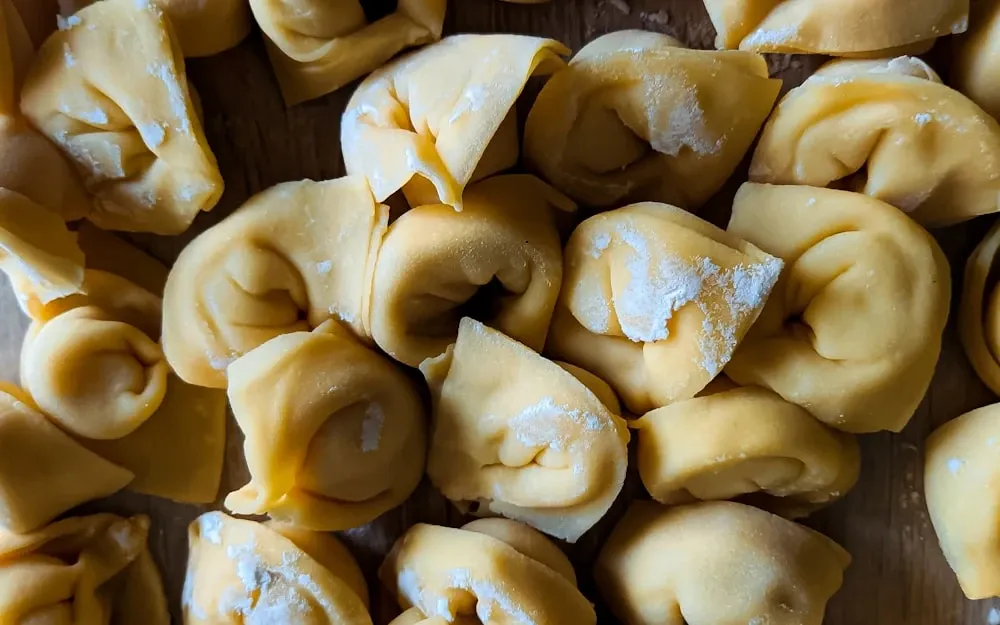
Tortellini are something else entirely: tiny rings, made by folding a small filled square around a fingertip and joining the ends, from Bologna, and served in broth rather than with sauce. Despite the ending, they are not small tortelli. The full family map is in our ravioli versus tortelli guide.
What goes inside
The filling most people picture is ricotta and spinach, seasoned with nutmeg and parmesan, and it is genuinely the most widespread. Meat, pumpkin (the Mantua version, with amaretti and mostarda, which divides opinion), mushroom and fish all have their regions and their seasons.
In Tuscany the answer is often potato, because that is what the Mugello fills its tortelli with. Whatever goes in, it has to be dry enough to hold together. A wet filling weeps into the dough and takes the seal with it, which is why ricotta should be drained and cooked spinach squeezed properly.
Sealing them so they survive the pot
Roll the sheet a touch thicker than you would for ribbons: a filled shape has to survive being stuffed, sealed and boiled. Lay the filling in a line with real gaps between the mounds, because crowding them is what makes sealing impossible later. A teaspoon each is plenty.
Then the part that matters: lay the second sheet over and press down around each mound with your fingertips, working outwards so the air escapes rather than getting trapped. Trapped air expands in boiling water and that is what bursts a raviolo. Seal firmly, cut with a wheel, and run a finger round every edge before they go anywhere near the pan.
Where to eat ravioli in Florence
Ravioli are on menus all over Florence, which makes them the shape where frozen, factory-made pasta hides most easily. Look at the edges: hand-sealed ravioli are slightly irregular, a little thicker where the dough was pressed, and a good menu names the filling of the day rather than listing "ravioli" all year round.
My guide to handmade pasta in Florence has the rest of the signs, and where to buy fresh pasta in Florence covers the pastifici that sell them by weight. Ravioli are also one of the two shapes every guest makes by hand in our class, so you will recognise a hand-sealed one when you see it.