Handmade Pasta Florence
EN

Tortelli Tuscany's filled pasta, explained.

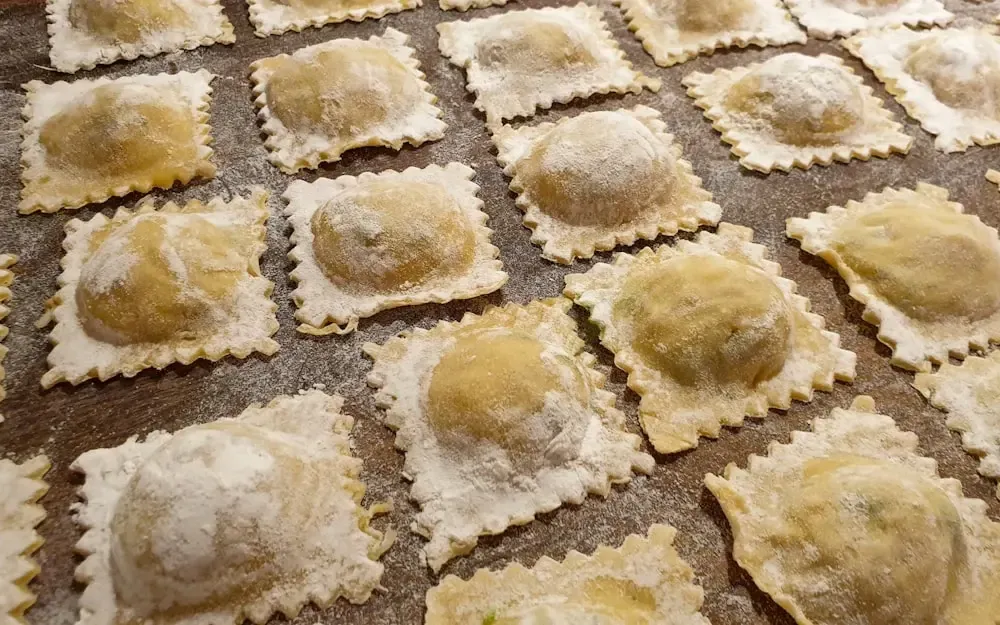
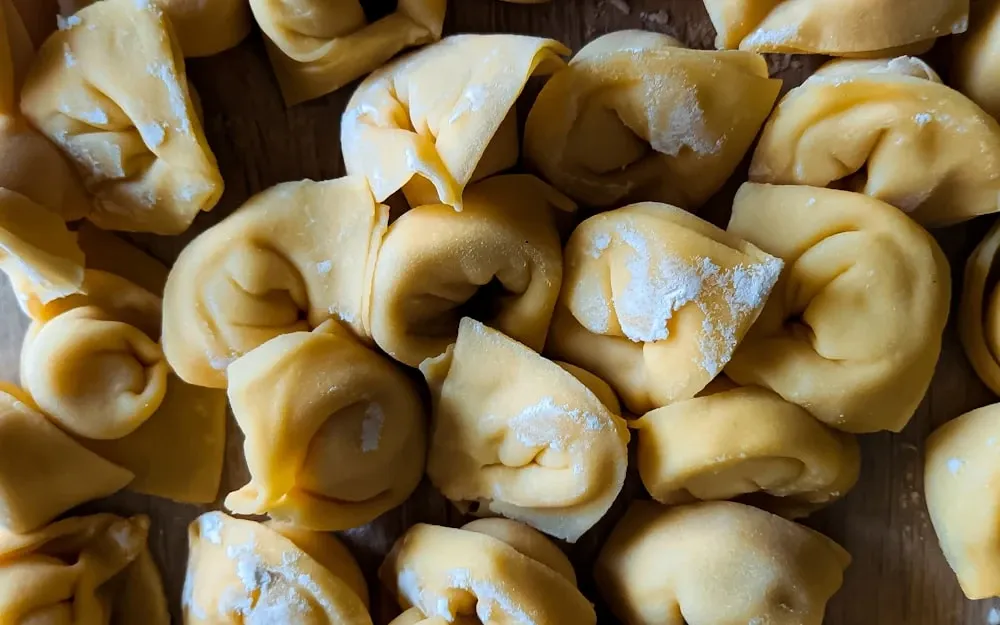
Tortelli are filled parcels of fresh egg pasta — a sheet of dough, a spoonful of filling, a second sheet pressed down and sealed around it. Tuscany's signature version is tortelli di patate, filled with seasoned potato rather than the ricotta and spinach most visitors expect, and it comes from the Mugello valley north of Florence.

Hand-folded tortelli filled parcels arranged on a floured surface
From
the Mugello, north of Florence
Dough
egg dough, rolled slightly thicker
Classic filling
potato; also ricotta & spinach
Shape
square or half-moon, sealed by hand
Classic sauces
butter & sage, meat ragù, mushroom
Difficulty
the shape that needs the most patience

Tuscany's filling is potato

Ask for tortelli in the Mugello, the hilly country north of Florence, and what arrives is filled with potato — mashed with garlic, parsley, a little tomato and parmesan, seasoned properly and sometimes lifted with nutmeg. It surprises people who expect ricotta, and it is one of the genuinely great regional dishes of Tuscany.

The reason is the same reason as always: potatoes grew well up there and meat did not go far. The other Tuscan version, tortelli maremmani, uses ricotta and spinach and comes from the coastal Maremma. Both are correct; they are simply from different valleys.

How they are folded

Roll the sheet slightly thicker than you would for ribbons — the dough has to survive being filled, sealed and boiled without splitting. Lay out spoonfuls of filling in a line, leaving proper gaps, then lay the second sheet over and press down around each mound with your fingers, pushing the air out towards the edge before you seal.

Trapped air is what bursts a tortello in the water, and it is the single most common failure. Seal firmly, cut with a wheel, and check every edge. This is the shape that separates people who are enjoying themselves from people who are in a hurry, and it is the one our guests are proudest of at the end of a class.

What to put on them

Very little, and that is the point. Butter and sage — foamed until it just starts to smell nutty, with a few crisped sage leaves — is the classic, and it is hard to improve on. A restrained meat ragù is the Mugello Sunday version.

What ruins tortelli is a sauce that competes with the filling. You have spent an hour making something with a flavour on the inside; do not bury it. If in doubt, butter, sage and a grating of parmesan.

Roll it yourself.

We teach all four of these shapes in a three-hour class in our Oltrarno kitchen — hands in the flour from the first minute, then everyone sits down to eat what they made. Max 8 guests, €95.

See the class

Questions, answered.

What is the difference between tortelli, tortellini and ravioli?

Size and shape rather than concept — all three are filled pasta. Tortelli are the larger square or half-moon parcels common in Tuscany and Emilia; tortellini are small ring-shaped ones from Bologna; ravioli is the broad general term, usually a smaller square. Regional naming overlaps and locals will disagree with each other happily.

What are Tuscan tortelli filled with?

In the Mugello, north of Florence, the classic filling is seasoned potato with garlic, parsley and parmesan. In the Maremma on the coast, ricotta and spinach. Both are traditional Tuscan fillings from different parts of the region.

Why do my tortelli burst when boiling?

Air trapped inside, almost every time. Press the top sheet down around each mound of filling with your fingers and work the air outwards before sealing the edge. Under-sealed edges and dough rolled too thin are the other two causes.

What sauce should I serve with tortelli?

Something simple that does not fight the filling. Butter and sage with grated parmesan is the classic; a restrained meat ragù is the Sunday version in the Mugello. Heavy or highly seasoned sauces bury the flavour you just spent an hour building.