The ribbon everything else is measured against
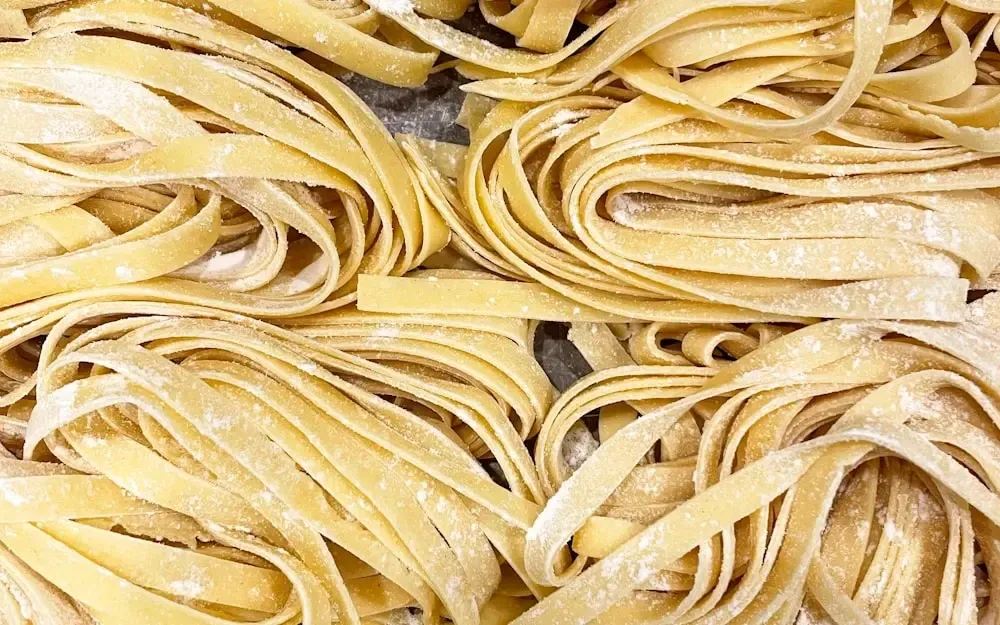
Tagliatelle come from Bologna, where the width is taken seriously enough that the local chamber of commerce once lodged a gold reference strip to settle arguments about it. Eight millimetres cooked is the Bolognese standard. Nobody in a Tuscan kitchen measures, but the target is the same.
Tuscany cooks them constantly regardless of where they were born, because they are the useful ribbon: wide enough for a substantial sauce, narrow enough to eat without a fight, and quick enough to be a Tuesday dinner rather than an occasion.
How they are cut
Roll the egg dough into a thin sheet, let it dry for a few minutes until it is leathery rather than tacky (this is the step people skip, and it is why their ribbons stick together), then flour it generously, roll it into a loose flat log and cut across with a sharp knife.
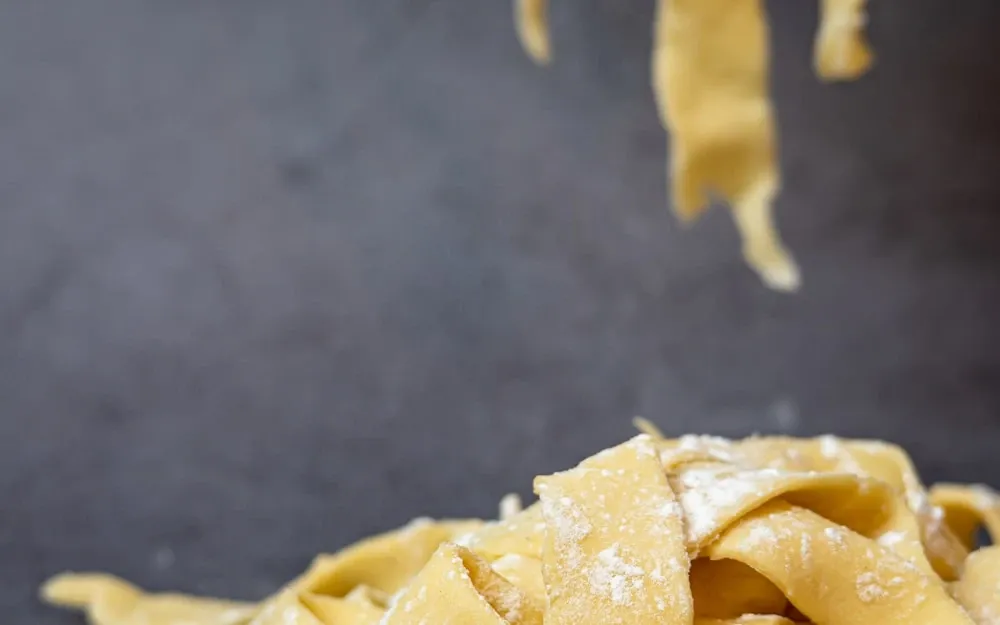
Then lift each cut immediately and shake it loose. Left in the roll, ribbons weld into a brick within minutes. Toss them in a little semolina and coil them into loose nests until the water boils. Tagliatelle are the shape that teaches you knife control, because at 6 mm a wandering cut is obvious in a way it never is on pappardelle.
What to put on them
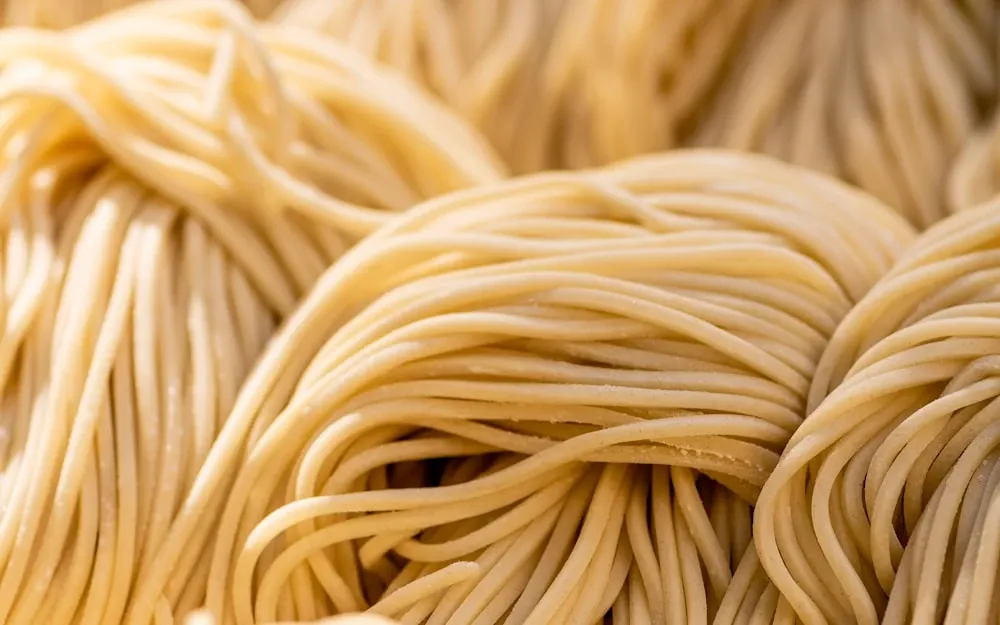
A proper ragù (slow-cooked minced beef and pork with soffritto, wine and a very little tomato) is the pairing, and in Bologna it is the only one anybody will admit to. Note what it is not served with: spaghetti. That is a foreign invention and it will be pointed out to you.
Beyond ragù, tagliatelle are superb with mushrooms, with butter and sage when you want something quiet, and with a simple tomato and basil when the tomatoes are actually good. The ribbon is narrow enough that a light sauce still coats it properly.