Handmade Pasta Florence
EN

Pappardelle Tuscany's widest pasta ribbon, explained.

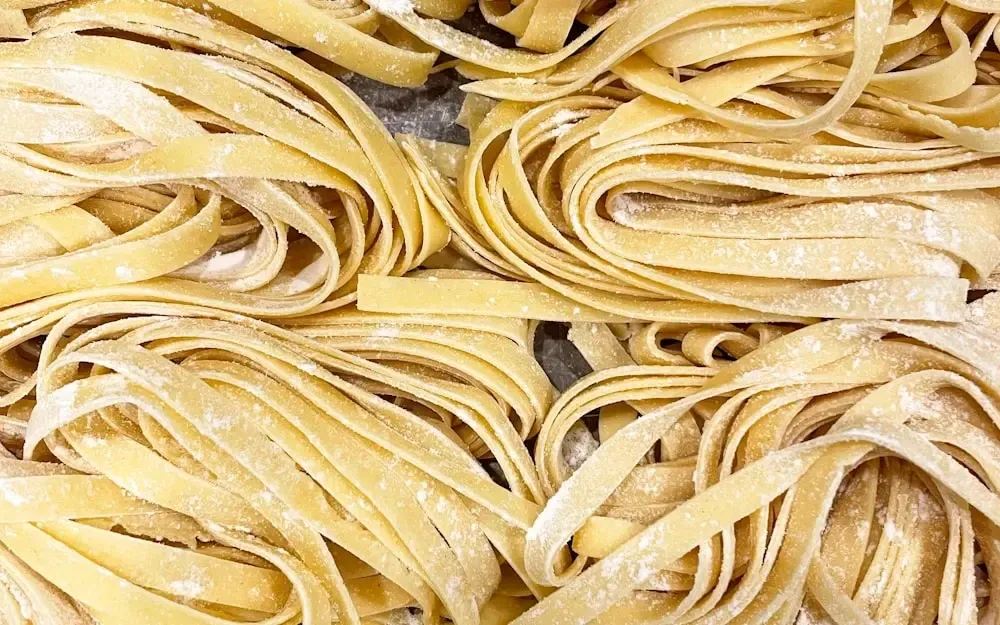
Pappardelle are the widest fresh pasta ribbon in the Tuscan repertoire — flat strips of egg dough cut 2 to 3 centimetres across. The width is not showing off: it exists so that a heavy, chunky game sauce has something broad enough to sit on instead of sliding off.

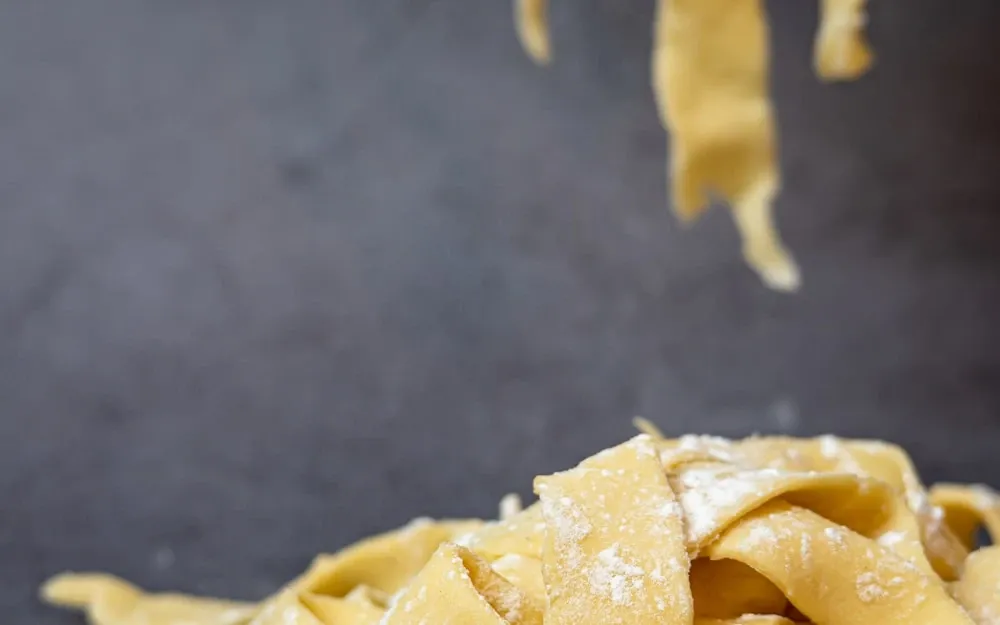
Wide pappardelle ribbons of fresh egg pasta on a floured wooden board
From
Tuscany
Dough
egg dough — flour and egg
Width
2–3 cm
Name from
pappare, to gobble
Classic sauces
cinghiale, lepre, anatra, porcini
Difficulty
easiest ribbon — the widest cut is the most forgiving

A name that tells you how to eat it

The word comes from pappare, a blunt Tuscan verb meaning to gobble or to scoff. It is not a delicate name and it is not a delicate pasta. Pappardelle are what you serve when the sauce has been on the stove since morning and everybody is hungry.

They are the ribbon of the Tuscan hills specifically — where tagliatelle belongs to Emilia and Bologna, pappardelle is what comes out of a Tuscan kitchen in autumn, when the hunting season starts and there is game to be dealt with.

How they are cut

The dough is a standard fresh egg dough, rolled out thin — thin enough to see the shadow of your hand through it, but no thinner, because a wide ribbon has to hold weight. Then you flour the sheet, roll it loosely, and cut across the roll with a knife at two to three centimetres.

Because the cut is so wide, pappardelle are the most forgiving ribbon to learn: a wobbly line matters far less at 3 cm than it does at 6 mm. They also cook fast — two or three minutes in well-salted water — and they must go straight into the pan with the sauce, never into a bowl to wait.

What to put on them

Ragù di cinghiale — wild boar, slow-cooked with red wine, juniper and tomato — is the pairing that made this shape famous, and it remains the correct answer. Lepre, hare, is the older and richer version, and the one an old Tuscan cook would choose if they could get it.

Beyond game, pappardelle take beautifully to duck ragù and to porcini in the few weeks of the year the mushrooms are worth having. The rule is simple: if the sauce is heavy, chunky and has been cooking for hours, this is the shape it wants.

Roll it yourself.

We teach all four of these shapes in a three-hour class in our Oltrarno kitchen — hands in the flour from the first minute, then everyone sits down to eat what they made. Max 8 guests, €95.

See the class

Questions, answered.

What is the difference between pappardelle and tagliatelle?

Width and origin. Pappardelle is cut 2–3 cm wide and is Tuscan, made for heavy game sauces like wild boar and hare. Tagliatelle is cut 6–8 mm and belongs to Emilia-Romagna, suiting finer meat ragù and mushrooms. The dough is the same in both cases.

What sauce is traditional with pappardelle?

Wild boar ragù (ragù di cinghiale) is the classic Tuscan pairing, with hare (lepre) as the older and richer alternative. Duck ragù and fresh porcini are the other two you will see on a good menu in Florence.

Are pappardelle made with egg?

Yes. Pappardelle are an egg-dough pasta — flour and whole eggs — which gives the wide ribbon the elasticity and strength it needs to carry a heavy sauce without tearing.

How long do fresh pappardelle take to cook?

Two to three minutes in plenty of well-salted boiling water, and then straight into the pan with the sauce to finish. Fresh pasta cooks far faster than dried, and pappardelle are usually the first thing on the plate.