
The shape library
Five shapes, five different sauces.
A shape is not decoration. Every one of these was invented to hold a particular kind of sauce, and swapping them is why a dish sometimes tastes thin for no obvious reason. Here is what each one is, and what it is for.
The five fresh pasta shapes we roll by hand in our Florence kitchen are pici, pappardelle, tagliatelle, tortelli and ravioli. In short:
- Pici: thick hand-rolled strands of flour and water, no egg. Siena's pasta, built for garlicky aglione and wild boar ragù.
- Pappardelle: the widest ribbon, 2–3 cm of egg dough. Made to carry heavy game sauces: boar, hare, duck.
- Tagliatelle: a narrow egg ribbon, 6–8 mm. The everyday ribbon for meat ragù and mushrooms.
- Tortelli: filled parcels, in Tuscany most often with potato or ricotta and spinach. Dressed simply, with butter and sage or a little ragù.
- Ravioli: the same idea as tortelli under the name the rest of Italy uses, usually smaller. Flat, sealed between two sheets of dough.
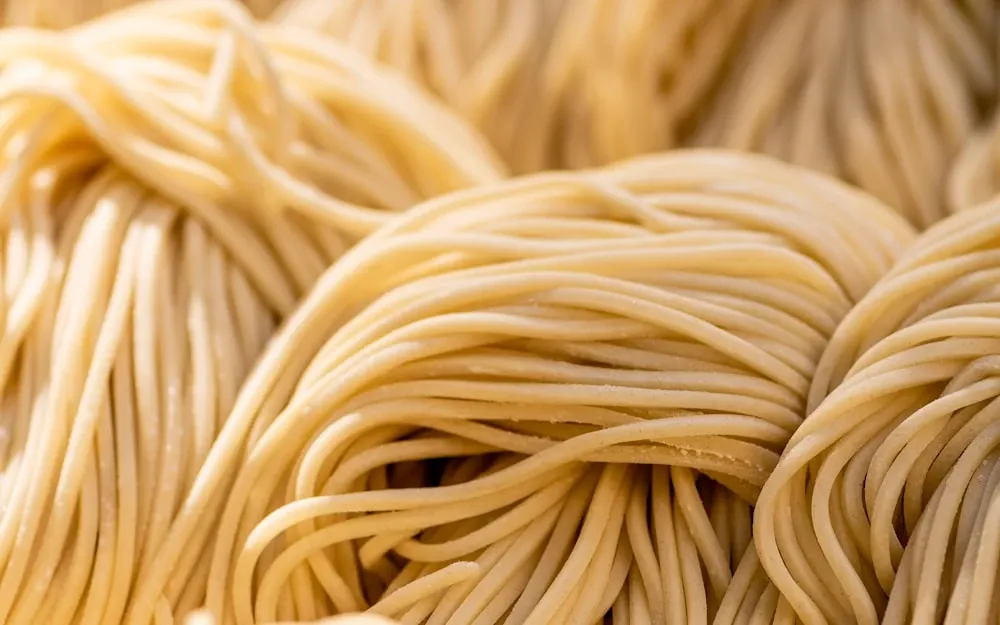
Pici
Siena's thick hand-rolled strand: flour, water, no egg.
Read the shape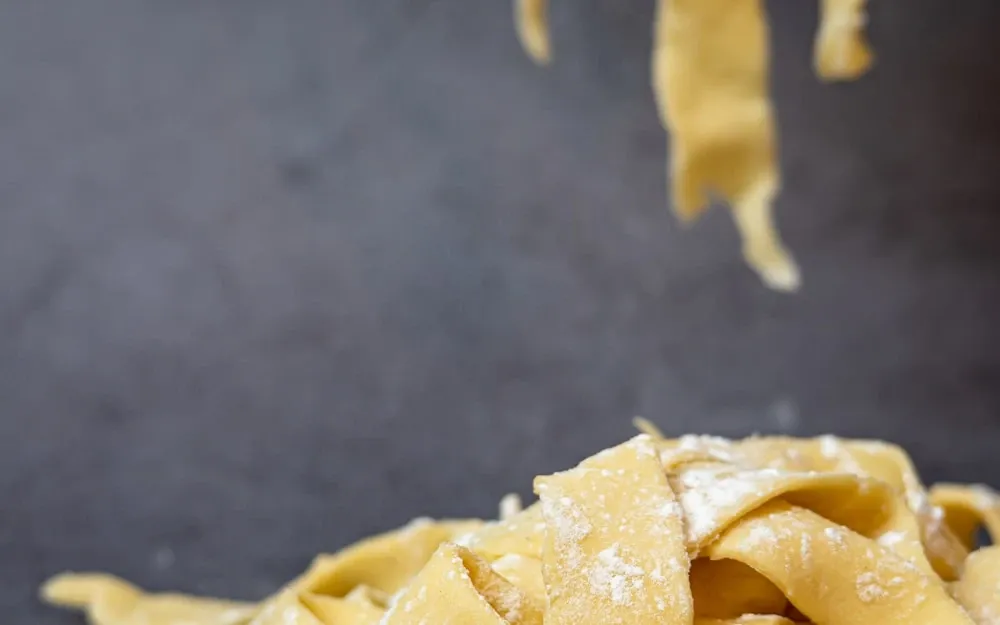
Pappardelle
The widest ribbon, built to carry wild boar and hare.
Read the shape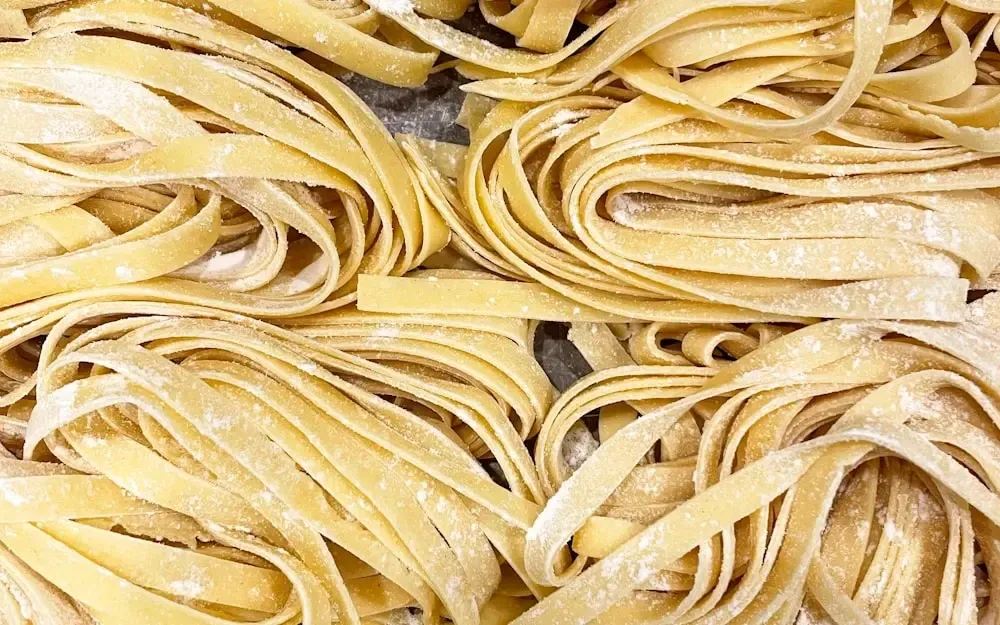
Tagliatelle
The everyday egg ribbon, 6–8 mm, ragù's natural partner.
Read the shape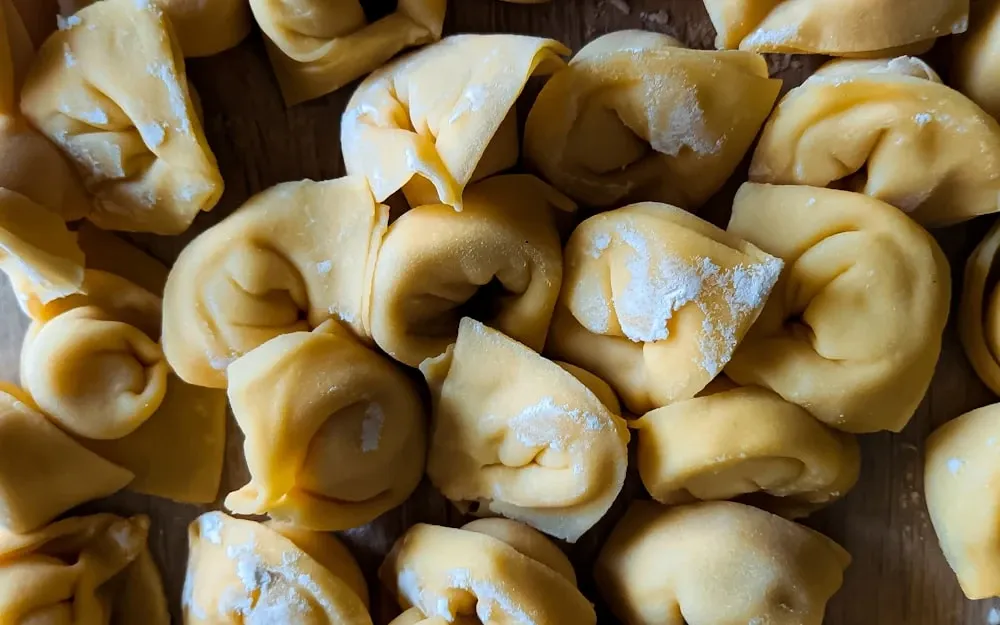
Tortelli
The filled parcel, in Tuscany, most often potato.
Read the shape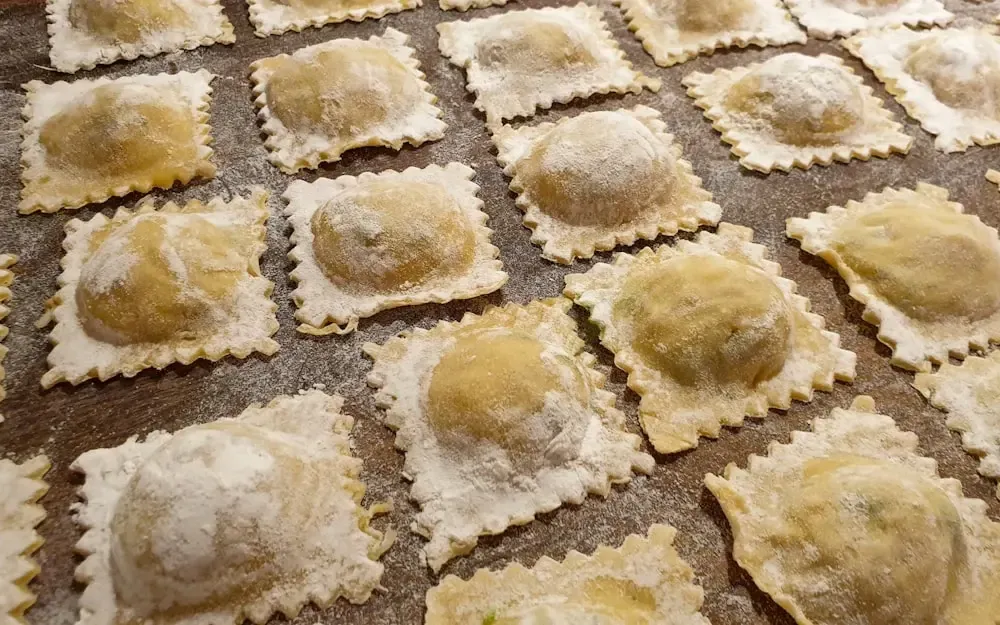
Ravioli
The filled square everyone knows, sealed between two sheets.
Read the shapeSide by side
| Shape | Dough | Cut | Built for |
|---|---|---|---|
| Pici | Flour & water, no egg | Rolled by hand, ~3 mm | Aglione, wild boar, cacio e pepe |
| Pappardelle | Egg dough | Flat ribbon, 2–3 cm | Wild boar, hare, duck, porcini |
| Tagliatelle | Egg dough | Flat ribbon, 6–8 mm | Meat ragù, mushrooms, butter |
| Tortelli | Egg dough, slightly thicker | Filled square or half-moon | Butter & sage, light ragù |
| Ravioli | Egg dough, slightly thicker | Sealed square or round, 4–5 cm | Butter & sage, tomato, light ragù |
Questions, answered.
Why does pasta shape matter?
Shape decides how much sauce clings and how the pasta feels when you bite it. A thick, rough, porous strand like pici grips a chunky sauce that would slide straight off a smooth ribbon; a wide pappardelle gives a heavy game ragù something to sit on. Matching them is most of the difference between a good plate and a dull one.
What is the difference between pappardelle and tagliatelle?
Width, and therefore purpose. Pappardelle is cut 2–3 cm wide and is built for heavy, chunky game sauces like wild boar or hare. Tagliatelle is cut 6–8 mm and suits finer meat ragù and mushrooms. Same egg dough, different job.
What is the difference between ravioli and tortelli?
Mostly size and region. Ravioli is the general Italian word for a flat filled parcel, usually a smaller square. Tortelli is what the same thing is called in Tuscany and Emilia, and they are normally bigger. Tortellini are a different thing again: tiny rings from Bologna, served in broth.
Which Tuscan pasta shape is easiest to make by hand?
Pici, because there is no rolling pin and no machine involved: you cut a strip of dough and roll it under your palms. It is also the most forgiving: pici are meant to be uneven, and the wonky ones hold sauce better.
Do you need eggs to make fresh pasta?
No. Pici are made with just flour, water and a little olive oil, a poor kitchen's pasta from central Tuscany. Ribbons like tagliatelle and pappardelle, and filled shapes like tortelli, use an egg dough for the elasticity and richness they need.
Roll it yourself.
We teach all four of these shapes in a three-hour class in our Oltrarno kitchen: hands in the flour from the first minute, then everyone sits down to eat what they made. Max 8 guests, €95.
Going deeper
Our full guide to Tuscany's fresh pasta traditions: where each shape comes from and why the region cooks the way it does.
Read the Tuscan pasta guide