
Tuscan pasta shapes: pici, pappardelle, tortelli & more
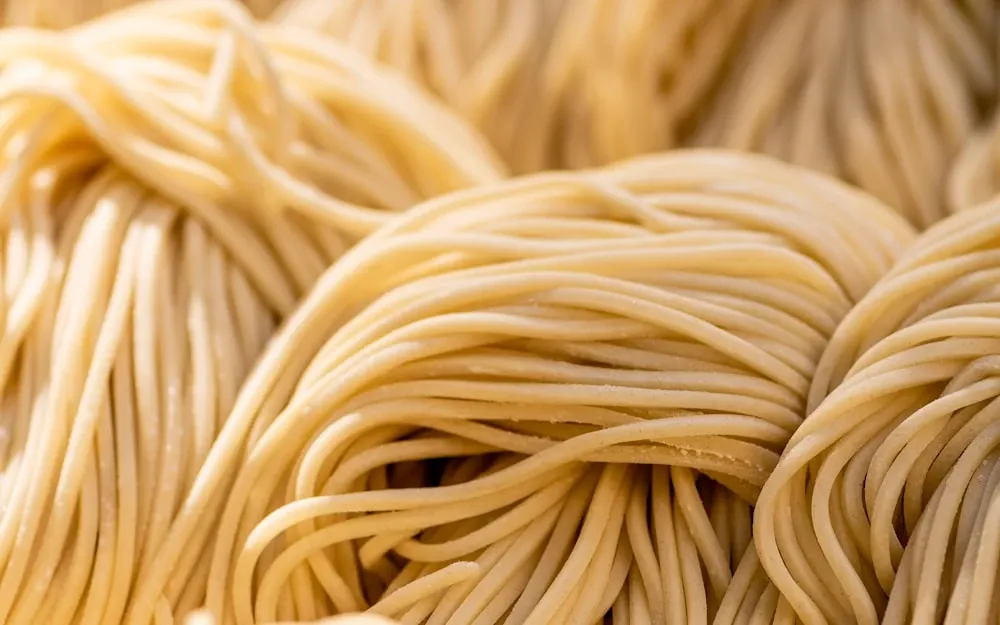
Ask what pasta Florence is famous for and you’ll get a surprising answer: strictly speaking, the city itself is more famous for beef and tripe than for pasta. But step into the hills around it (where our two agriturismi are), and you’re in one of Italy’s great fresh-pasta landscapes. These are the shapes we teach, eat and argue about.
The classic Tuscan pasta shapes are:
- Pici: thick, hand-rolled flour-and-water ropes (Siena, Val d’Orcia)
- Pappardelle: wide egg ribbons built for game ragùs
- Tagliatelle: the everyday, narrower egg ribbon
- Tortelli di patate: potato-filled parcels from the Mugello
- Ravioli & gnudi: the gentle ricotta-and-spinach classics
Below, a chef’s guide to each: where it comes from, how it’s made by hand, and the sauce it was born to carry.
Pici: the hand-rolled rope
From: the Sienese hills and the Val d’Orcia, south of Florence. The dough: just flour and water, no egg. Poor man’s pasta, and proud of it.
Pici are thick, uneven ropes rolled one at a time between your palms, and no two ever match. That irregularity is the whole point: a fat, chewy strand that grips sauce the way spaghetti never could. The classic pairings are all’aglione (a garlic-heavy tomato sauce), cacio e pepe, and con le briciole, with toasted breadcrumbs, from the days when even cheese was a luxury.
Rolling pici is also the most meditative job in our kitchen, which is why it opens The Chef’s Table class; five minutes in, everyone goes quiet.
Pappardelle: the wide ribbon for game
From: all of Tuscany; the name comes from pappare, to gobble up. The dough: rich egg pasta, rolled thin and cut wide (2–3 cm).
Pappardelle exist because Tuscany hunts. A ribbon this wide stands up to the region’s slow game ragùs: cinghiale (wild boar) above all, and the old-school lepre (hare). Autumn on a plate. If a Florence trattoria makes its pappardelle in house, that’s where I order.
Tagliatelle: the everyday egg ribbon
Cut from the same egg dough as pappardelle but narrower, tagliatelle are the workhorse of the fresh-pasta table: right with a meat ragù, right with porcini in season, right with almost anything. Learning to roll a sheet thin enough to read a newspaper through, then cut it evenly by hand, is the core skill of Tuscan pasta making. Get it right and you’ve learned three shapes at once.
Tortelli di patate: the Mugello’s filled parcel
From: the Mugello, the green valley north of Florence.
Tuscany’s answer to ravioli, filled not with cheese but with potato (mashed with garlic, parmesan and a little nutmeg), then folded into generous squares. It sounds like carb-on-carb because it is, and it’s magnificent, usually under a meat ragù or butter and sage. Folding tortelli is the fiddliest thing we teach and the one guests are proudest of. Sealing the edges properly matters: a burst tortello in the pot loses its soul to the water.
Ravioli and gnudi: the gentle classics
Ricotta-and-spinach ravioli with butter and sage is the shape everyone knows, and Tuscany does it simply and well. But look for gnudi, “naked” ones: the filling alone, rolled in a whisper of flour and poached. No pasta at all, which is exactly the kind of joke Tuscan cooking likes to play.
So what should you try first?
If you’re eating: pici if you see them, pappardelle al cinghiale if it’s autumn. (Here’s where to look in Florence.)
Each of the four shapes we teach has its own page in our pasta shape library: the dough, the cut, and the sauce it was built for, one shape at a time.
If you’re making: start with tagliatelle for the skill, pici for the fun, tortelli for the bragging rights. We teach all of them, four shapes per class, at our kitchen in the Oltrarno, or live online if Tuscany isn’t on the calendar yet.
And if you want to eat a shape where it comes from, pici belong to Siena and tordelli to Lucca: day trips from Florence, chosen by what is on the plate.
Frequently asked
What pasta is Tuscany known for?
Tuscany is best known for pici (thick, hand-rolled flour-and-water spaghetti from the Siena hills), pappardelle (wide egg ribbons served with wild boar or hare ragù), and tortelli di patate (potato-filled parcels from the Mugello). Everyday tables also lean on tagliatelle and ricotta-and-spinach ravioli.
What is the typical pasta of Florence?
Florence itself is more famous for beef and tripe than for pasta, but the fresh-pasta traditions of the surrounding Tuscan hills define its tables. Pici, pappardelle al cinghiale (wild boar), and Mugello tortelli di patate are the shapes you will see most often on a Florentine trattoria menu.
What is the difference between pici and pappardelle?
Pici are round, thick, hand-rolled ropes made from just flour and water, with no egg; pappardelle are flat, wide ribbons cut from a rich egg dough. Pici grip garlicky tomato or breadcrumb sauces, while pappardelle are built for slow-cooked game ragùs.
Rather learn it with your hands?
Roll, fold and eat it yourself: in our Florence kitchen or live online.