
Where to buy fresh pasta in Florence (and pasta to go)
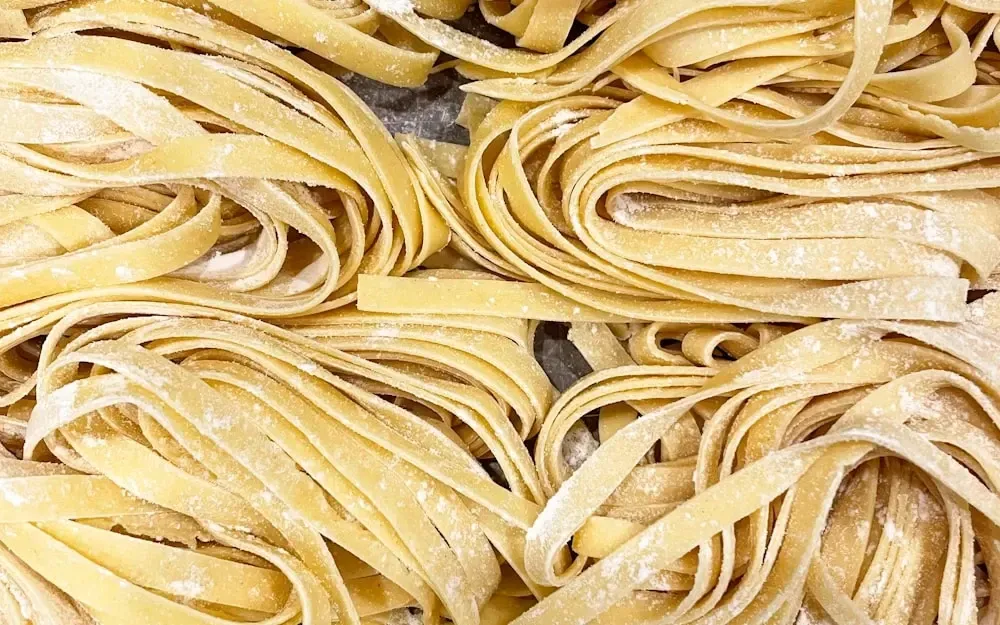
People ask me this more than almost anything else, usually on their last day: where can I buy pasta like the one I just ate, and can I take it home? Here is the honest answer, from someone who rolls it for a living.
Where can you buy fresh pasta in Florence?
Three places, in order of how much I trust them:
- A pastificio. A shop that makes fresh pasta on the premises and sells it by weight. This is where Florentines buy the tortelli for Sunday lunch.
- The market stalls. Both the Sant’Ambrogio market and the ground floor of the Mercato Centrale have fresh-pasta sellers. They trade in the morning, Monday to Saturday.
- A good gastronomia or alimentari. Many delis keep a tray of fresh pasta from a local maker beside the cheese counter. Ask who made it: a good shop will tell you.
What I would skip: the sealed trays of pasta fresca in the supermarket fridge. They are industrial, pasteurised for a long shelf life, and perfectly fine on a weeknight. They are not what you came to Florence for.
How do you spot a real pastificio?
- You can see the work. A table, a sheeter or a rolling pin behind the counter, flour on somebody’s forearms. If the pasta arrives in a delivery van, it is a shop, not a pastificio.
- The shapes change. Pappardelle in autumn when the boar ragù comes back, ravioli with whatever greens are good this week. A counter that looks identical every day of the year was filled from a factory.
- Filled pasta is sold by weight and made that day. Look at the edges of the ravioli: hand-sealed ones are slightly irregular.
- There is a queue on Saturday morning. Sunday lunch is the fresh-pasta meal of the week here, so Saturday morning is when a good pastificio is busiest. Most of the city’s food shops close on Sunday, which is worth knowing if you are planning a Sunday in Florence.
If you searched “fresh pasta near me” from a hotel in the centre, look for the words pastificio or pasta fresca on the sign, and go in the morning: by late afternoon the best shapes are gone.
How much should you buy?
Everything is sold by the etto, 100 grams. For ribbons such as tagliatelle or pappardelle, allow about one etto per person as a first course, one and a half as a main. For filled pasta, allow one and a half to two etti. “Tre etti, per favore” is a perfectly good sentence.
Pasta to go: eating it on the move
Florence has caught up with the idea of pasta in a box. A number of small counters in the centre now cook fresh pasta to order and hand it over to take away, and the food hall upstairs at the Mercato Centrale, open every day, has hot pasta among its stalls.
It is a good lunch on a bench between two museums. Two tips from the kitchen side: short and filled shapes survive a box better than long ribbons, which keep cooking in their own heat and go soft, and a sauce with some oil or butter in it holds up better than a thin tomato one. For a proper sit-down plate, my guide to handmade pasta in Florence is the better read.
How long does fresh pasta keep?
- Egg ribbons: one to two days in the fridge, loosely dusted with flour in a paper bag, not sealed plastic, or they sweat and stick.
- Filled pasta: the same day or the next. The filling is wet, and the dough softens around it.
- Freezing: both freeze well. Spread them on a floured tray, freeze, then bag them. Cook straight from frozen; never thaw them first.
Can you take fresh pasta home on a plane?
Within Europe, on a short flight, with a cool bag: yes, and it will be fine for dinner that evening. Beyond that, two problems. Fresh pasta is perishable, so a long-haul day in a warm bag is not kind to it. And filled pasta is usually stuffed with ricotta, cheese or meat, and many countries restrict meat and dairy in personal luggage. Check your own country’s rules before you pack a kilo of ravioli.
The better souvenir is good dried pasta: artisanal, bronze-cut (trafilata al bronzo) and dried slowly, which gives it the rough surface that holds sauce. It travels in a suitcase, keeps for a year and is what most Italian kitchens use on a weekday anyway; I explain the difference in fresh vs dry pasta. Add a bag of Italian flour (here is which flour to buy) and you can make the fresh kind yourself.
Or take the skill home instead
Pasta does not travel well. Knowing how to make it travels perfectly.
In our pasta class in Florence you roll fettuccine and fold ravioli by hand in three hours, then eat them at our table in the Oltrarno: €95, max eight guests. And if you have already flown home, the live online class streams from the same kitchen, from €68, with an optional ingredient kit shipped to your door. It is the only way I know to get Florence’s fresh pasta through customs.
Frequently asked
Where can I buy fresh pasta in Florence?
In three kinds of place: a pastificio (a shop that makes fresh pasta on the premises), the fresh-pasta stalls at the Sant'Ambrogio market and on the ground floor of the Mercato Centrale, which trade on weekday and Saturday mornings, and the counter of a good gastronomia. Supermarket pasta in sealed trays is industrial: fine for a weeknight, but not handmade.
Is there pasta to go in Florence?
Yes. A number of small counters in the centre cook fresh pasta to order and serve it in a box, and the food hall upstairs at the Mercato Centrale, open every day, has hot pasta among its stalls. It makes a good quick lunch; short and filled shapes travel in a box better than long ribbons.
How long does fresh pasta last?
Fresh egg ribbons such as tagliatelle keep one to two days in the fridge, loosely dusted with flour. Filled pasta like ravioli is best cooked the same day or the next. Both freeze well: freeze them spread on a tray, then bag them, and cook straight from frozen.
Can I take fresh pasta home on a plane?
Fresh pasta is perishable, so it only makes sense on a short flight with a cool bag. Filled pasta is often stuffed with cheese or meat, which many countries restrict in personal luggage, so check your own country's rules. Good artisanal dried pasta has no such problem and is the better souvenir.
How much fresh pasta should I buy per person?
Ask by the etto, which is 100 grams. For fresh ribbons, about one etto per person as a first course or one and a half as a main. For filled pasta, one and a half to two etti per person.
Keep readingMore guides from our kitchen
- The best handmade pasta in Florence: an honest chef’s guideA Florence pasta chef on where to eat real handmade pasta, the frozen-pasta truth busy kitchens won’t advertise, and what to order when you find it.
- Florence food markets: Sant'Ambrogio vs Mercato CentraleA Florence chef on the two food markets: which one locals shop at, when to go, what to buy in season, and how to make a morning of it.
- What flour is used for authentic Italian fresh pasta?If you want to make authentic Italian fresh pasta, you need the right flour. Learn the difference between 00 flour and semolina, and when to use each.
Rather learn it with your hands?
Roll, fold and eat it yourself: in our Florence kitchen or live online.