
Why a Head Chef's Cooking Class in Florence Costs More
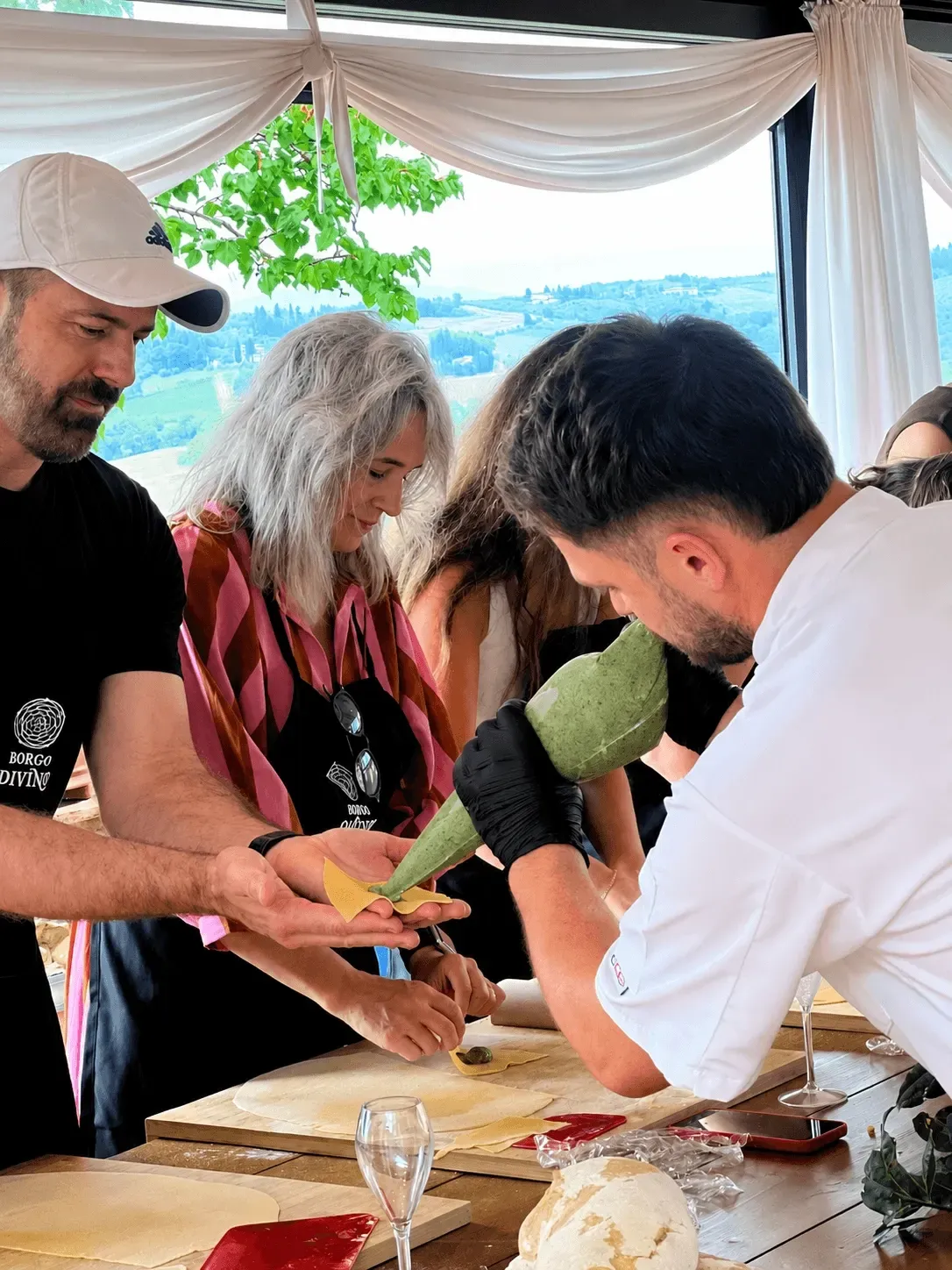
Most people picture the same thing when they book a cooking class in Florence. A long room with fifteen or twenty other travellers. A host shows each step at the front, then you try it at your own board before the plates come out. You eat what you made with a glass of wine and take a photo with flour on your hands.
Plenty of those classes are good fun, and they cost less than ours. We have no problem with that. This post is about what the extra money pays for when the person teaching you is a head chef, because a guest asked us that question recently and it deserves a full answer.
What happened when a guest compared prices
Not long ago a guest told us they had already done a cooking class in Florence: a big market tour with a class afterwards, at about half our price. They had enjoyed it, and they wanted to know why ours cost more.
We told them who would be teaching. Every one of our classes is designed and taught by one of us two, Endri or Marsel, and our day job is running the kitchens of two agriturismi in the hills outside Florence. Their view of the price changed as soon as they heard that, and the rest of this post is the longer version of what we told them.
What changes when a head chef teaches the class?
A head chef runs a kitchen. They plan the menu, order the produce, train the cooks and answer for every plate that goes out. Our weeks include wedding feasts for two hundred guests and live pasta shows. Endri also spent six years as an artisan baker before becoming a head chef, which is a long time spent judging dough by hand.
In a class, that experience shows up in small moments. A chef can tell by touch that your dough needs another minute of kneading, or a spoon of water, before you notice anything is wrong. They see the sheet starting to tear at the edge and show you why it happened. They explain the reason behind each step, so you can repeat it in your own kitchen without us.
Big-group class vs a head chef’s table
These are the differences we see most often. Group sizes and formats vary a lot in Florence, so check the details of any class you are considering, ours included.
- Who teaches. In a large class the teacher can be a host or an instructor who follows a set script. At ours it is Endri or Marsel at every class, including the market tour, private classes and the online class.
- Group size. Larger classes in Florence can have twenty people or more around one teacher. The Chef’s Table takes eight guests at most, and Mercato & Mani takes six.
- Technique. A big class shows each step once, from the front. At a table of eight you learn on your own dough, from how firm it should feel before it rests to how to seal a raviolo so no air stays inside. On a humid day we change the flour, and we tell you why.
- Flavour. Good pasta depends on steps that are easy to skip in a hurry, like salting the water properly and finishing the pasta in the pan with a splash of its cooking water. A chef tastes with you and adjusts as you go, the same way they would in their own kitchen.
- Ingredients. A head chef buys produce every week for a working kitchen and knows what is good in which month. On Mercato & Mani we shop at Sant’Ambrogio together, and in late October and November the stalls have porcini and the first green new-season olive oil.
- Attention. With eight people, a chef can reach you in the half minute when your dough tears, which is when most of the learning happens. With twenty, you wait your turn.
- What you take home. We email the recipes after the class, and any pasta you don’t finish is dried and bagged for you to take back to your hotel.
Is the extra cost worth it?
It depends on what you want from the afternoon. If the goal is a cheap, sociable evening with a dozen other travellers, a larger class is a fair choice and you should book one. If you want to make fresh pasta at home next month without a recipe video open, the extra money pays for someone who cooks for a living standing next to you while you learn.
For the numbers, our breakdown of what pasta classes in Florence cost covers the price ranges and what should be included at each. If you are comparing several schools, the seven questions to ask before booking apply to any class, including ours.
Book a class with a head chef in Florence
Every class we run is taught by one of us, from the three-hour Chef’s Table in our Oltrarno kitchen to private classes and the live online class. If the class you were comparing was a market class, Mercato & Mani starts at Sant’Ambrogio market with one of us and ends at our table, with six guests at most.
You can compare all of them on our classes page. Send us your dates and we will tell you what is still open. We usually reply within a few hours, weekends included.
Frequently asked
Who teaches the cooking classes at Handmade Pasta Florence?
Every class is taught by Endri Cerhozi or Marsel, the head chefs of two agriturismi in the hills outside Florence. That includes The Chef's Table, the Mercato & Mani market tour, private classes and the live online class. We do not hand classes over to assistants or hired hosts.
Is a chef-led cooking class in Florence worth the extra cost?
If you want to make the dish again at home, yes. A head chef with a small group can fix your dough while you are making it and explain what went wrong, and that is what you remember later. If you mainly want a sociable evening, a larger and cheaper class is a fair choice.
What does a professional chef teach that a big-group class usually doesn't?
The corrections: how firm the dough should feel before it rests, how much flour to add on a humid day, how thin to roll a sheet for ravioli compared with fettuccine, and how to finish pasta in its sauce with a splash of the cooking water. In a group of twenty these are shown once at the front. At a table of eight you learn them on your own dough.
Are large-group cooking classes in Florence still a good choice?
Yes, for the right trip. They cost less and are easy to book at short notice, and many are well run. They suit travellers who want a fun evening more than a skill to take home. Ask for the maximum group size before you book so you know which kind of class you are buying.
Keep readingMore guides from our kitchen
- How Much Does a Pasta Class in Florence Cost? (2026)A Florence chef who runs classes on what €60, €95 and €150 actually buy in 2026, the extras added at the end, and what to ask before you book.
- How to choose a pasta class in Florence: 7 questionsFlorence has hundreds of pasta classes and the listings look identical. Seven questions that predict whether you’ll enjoy it, starting with group size.
- Where to take a pasta making class in Florence (2026)Comparing the best pasta making classes in Florence: Handmade Pasta Florence, Mama Florence, and 360 Cooking Class Experience. Which one is right for you?
Rather learn it with your hands?
Roll, fold and eat it yourself: in our Florence kitchen or live online.