
Florence with Kids: What to Do and Where to Eat
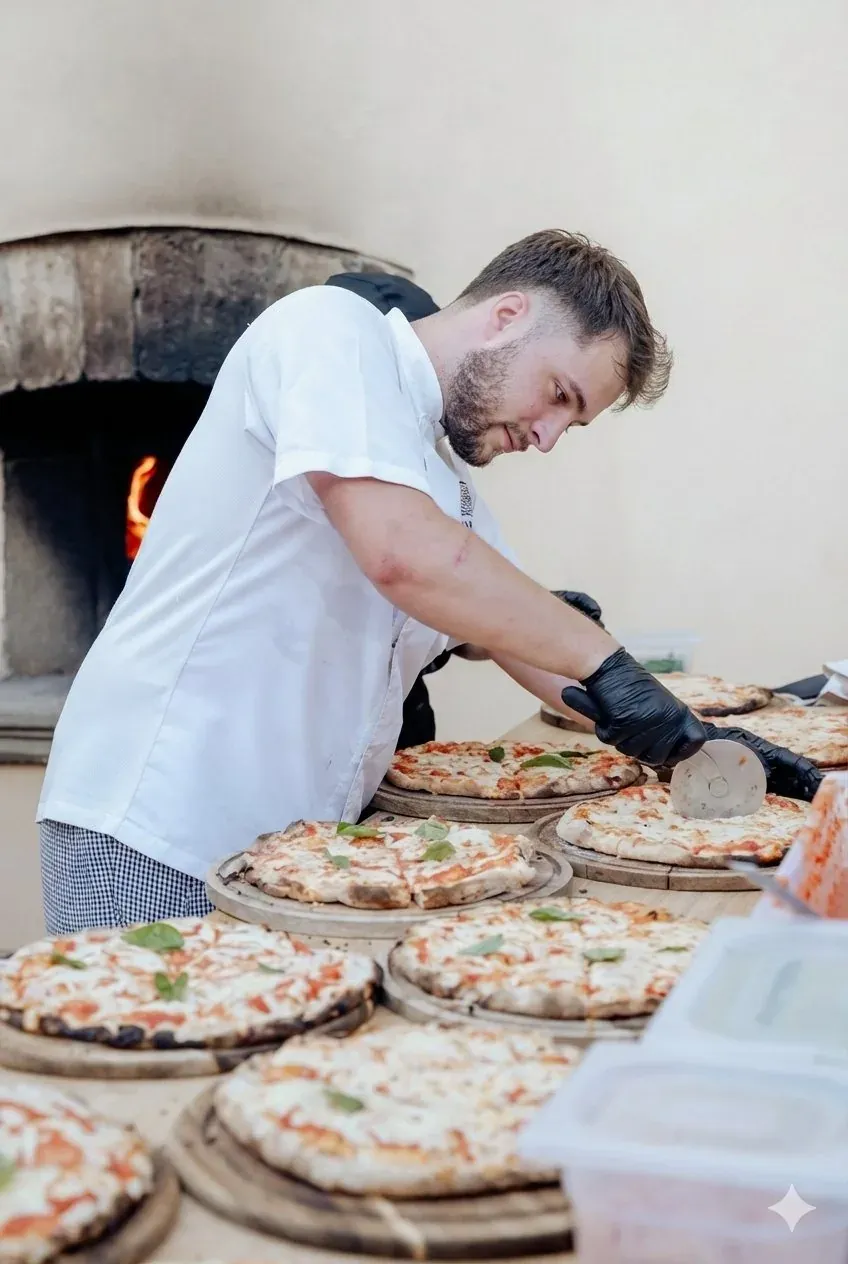
Florence is a museum city, and museums are where a day with children goes wrong. The good news is that it is also a food city, and that is the part children are naturally good at. Here is a day built around eating and walking rather than queueing, from people who cook here and who watch families arrive exhausted at two in the afternoon.
Best with kids: Boboli Gardens, the bell tower, the Mercato Centrale, gelato, the carousel. Hardest with kids: the Uffizi and the Accademia, and dinner before 20:00. The one phrase to learn: pasta in bianco.
What to do in Florence with children
Mornings are for height and air. Climb Giotto’s bell tower rather than the dome: it is 414 steps but it opens out onto landings on the way up, so there are natural places to stop and look. The dome is 463 steps in a single committed spiral with no lift and no turning back, which is a different proposition with a seven-year-old.
The Boboli Gardens are the release valve. They are big, sloped, full of gravel paths, fountains and hiding places, and children can simply move. The Bardini Garden next door is smaller, quieter and has the better view.
The Mercato Centrale works twice: downstairs is a real food market with whole fish and hanging meat, which small children find far more interesting than a painting, and upstairs is a food hall where everyone orders something different and nobody has to agree.
Two small rituals cost nothing and are remembered: rubbing the nose of Il Porcellino, the bronze boar at the Mercato Nuovo, and the carousel in Piazza della Repubblica.
Piazzale Michelangelo at sunset gives you the view, wide steps to sit on, and no requirement to be quiet.
The honest caveat: the Uffizi and the Accademia are extraordinary and they are also an hour of queueing followed by crowded rooms where the rule is do not touch anything. If you want to do one, book a timed slot, go first thing, and do only that one. Both are closed on Mondays, along with Palazzo Pitti.
Where to eat in Florence with children
Italian restaurants are genuinely welcoming to children; the friction is timing and portions, not attitude.
- Schiacciata. The flat, oil-rich Tuscan bread, split and filled, eaten walking. It is the single most useful food in this city with a hungry child, and it costs a few euros.
- Pizza al taglio. By the slice, by weight, no waiting.
- The food hall at the Mercato Centrale. Everyone picks their own. This solves the family where one child eats only plain pasta and another wants to try everything.
- Gelato, once a day, with the colour test: dull pistachio and grey banana mean real fruit and nuts. Fluorescent means paste.
- A proper trattoria at lunch rather than dinner. Lunch is cheaper, quieter, earlier, and fresh pasta is at its best because kitchens that roll their own roll it that morning.
Two pieces of restaurant vocabulary do most of the work. Pasta in bianco is plain pasta with butter or oil and parmesan on the side — what Italian parents order for their own children, so nobody will think anything of it. Mezza porzione is a half portion, normal and usually cheaper. Ask for both without apology.
And if your child is the adventurous kind, lampredotto from a cart is a few euros and an excellent story to take home.
A day that actually works
- 09:00 Bell tower, before the heat and the queues.
- 10:30 Mercato Centrale downstairs, then a schiacciata.
- 12:00 Cross the river. Boboli or Bardini, and let everyone run.
- 13:30 Lunch as the main meal: pasta, half portions, no rush.
- 15:30 The quiet hour. Back to the room, or a long gelato in the shade.
- 17:30 Il Porcellino and the carousel, then the walk up to Piazzale Michelangelo.
- 19:30 Something small. Pizza al taglio, or the food hall again.
Note what is not in it: two museums, and dinner at nine.
Cooking together, which children are unexpectedly good at
The thing that surprises most parents is that a hands-on kitchen holds a child’s attention far longer than a gallery does, because there is something to do with their hands every few minutes.
Our family cooking class in Florence takes children from six, always with an adult at the table, and never more than eight people including the children — which is the whole reason a chef can be beside a child when a fold goes wrong. It runs about three hours, structured around the dough’s own rhythm: knead, let it rest, eat something, come back. Children are €50, adults €95, and under-sixes sit and eat free rather than cook, because the boards and rolling pins are the wrong size for smaller hands. Knife work is limited and supervised, and the boiling water stays with the chefs.
If you are travelling without children, or want the longer adult version, that is The Chef’s Table.
Practical notes nobody tells you
- Heat. From June to September the middle of the day is genuinely hard. Plan the indoor or shaded hour between 14:00 and 16:00 deliberately.
- Water. Public fountains across the city run cold and drinkable. Carry one bottle and refill it.
- Pushchairs. The cobbles are rough and the pavements narrow. A carrier is easier for anyone light enough to carry.
- Bathrooms. Plan them around cafés and museums; free public ones are scarce. Buying a coffee buys the bathroom.
- Mondays. The Uffizi, the Accademia and Palazzo Pitti are shut, which sounds like a problem and is actually an opportunity — we wrote a whole guide to what to do in Florence on a Monday.
- The Oltrarno is the side of the river with workshops, less traffic and more room to breathe: things to do in the Oltrarno.
Plan the food, keep the museums to one, and let the afternoon be boring on purpose.
Frequently asked
Is Florence good for children?
Yes, if you plan around food and open space rather than around galleries. The historic centre is small enough to cross on foot in twenty minutes, gelato is everywhere, and the Boboli Gardens give children room to run. The museums that make Florence famous are the part that tests a child's patience, not the city itself.
Can children climb the Duomo in Florence?
The dome is 463 steps with no lift, a tight spiral near the top and no way to turn back once you are in the stairwell. Check the current minimum age when you book, because it has changed over the years. Giotto's bell tower next door is 414 steps, opens out at several levels, and is the easier climb with a child.
How do you order for a fussy eater in Italy?
Ask for pasta in bianco: plain pasta with butter or olive oil, and parmesan on the side. It is what Italian parents order for their own children, so no waiter will blink. Mezza porzione, a half portion, is also completely normal and usually cheaper.
What time do restaurants in Florence open for dinner?
Rarely before 19:30, and many kitchens start at 20:00. With small children that is often too late, so the usual solutions are an early trattoria that opens at 19:00, the upstairs food hall at the Mercato Centrale where everyone chooses separately, or making lunch the big meal and keeping dinner small.
Is Florence pushchair friendly?
Only partly. The cobbles are uneven, pavements in the centre are narrow and often blocked, and many buildings have steps. For a child light enough to carry, a sling or carrier is easier than a pushchair. For an older child, walking is genuinely fine: almost everything in this guide is within a twenty-minute walk.
Can children do a cooking class in Florence?
From about six, with an adult at the table. Below that, the boards, rolling pins and cutters are simply the wrong size for small hands. Our own family class takes children from six alongside a parent, with a maximum of eight people including the children, so a chef is always within reach.
Rather learn it with your hands?
Roll, fold and eat it yourself: in our Florence kitchen or live online.