
Agriturismo Cooking Classes in Tuscany: What to Expect
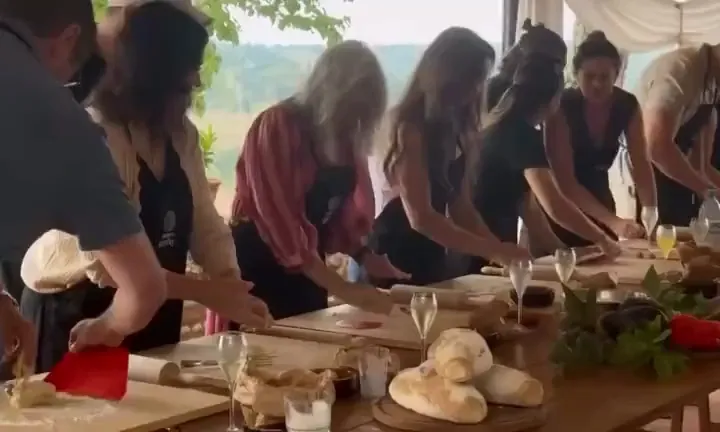
Search for a cooking class in Tuscany and you get two different things wearing the same name. One is a class in a city cooking school, three hours, walk in off the street. The other is a day on a working farm in the hills, where the first thing you do is walk out to the garden.
We cook in both. Endri and Marsel are the head chefs of two agriturismi in the hills outside Florence and also teach in our own city kitchen in the Oltrarno, so this is a comparison we make most weeks. Here is what the farm version actually involves, and who it does not suit.
What an agriturismo actually is
An agriturismo is a working farm licensed to host guests. The licence is the important part: Italian law ties it to real agricultural activity, so an agriturismo is a farm first and a hospitality business second. That is why the olive oil on the table is usually the estate’s own, and why the menu changes when the garden does.
It also means the range is enormous. Some agriturismi are a few rooms above a working barn. Others are restored estates with a pool, a restaurant and a wedding licence. Both are legitimately agriturismi, and the cooking class on offer at each will feel nothing like the other.
How a farm class differs from a city class
| Class in Florence | Class at an agriturismo | |
|---|---|---|
| Length | Two to three hours | Usually half a day |
| Getting there | On foot | Car or an arranged transfer, 30 to 45 minutes from Florence for the nearest hills |
| Where the food comes from | The morning market | Partly the estate’s own garden |
| Group size | Small, often capped under ten | Larger, because farm kitchens and tables are |
| The meal | Lunch or dinner at one table | A long lunch, usually outside if the weather allows |
| Priced | Per person | Often per group |
The craft is the same in both. Flour, eggs, your hands, a board. What changes is the half-day shape of it and the fact that on a farm the menu is decided partly by what is ready rather than entirely by the chef.
What the day usually looks like
Most farm classes follow the same arc, and it is worth knowing it so you can plan the rest of the day around it honestly rather than optimistically.
You arrive mid-morning. Someone walks you round the part of the garden that is producing, and what is ready decides some of what you will cook. Then you are at the bench for the bulk of it: dough, resting, rolling, shaping, a sauce built properly rather than reheated. Somewhere in there a loaf or a focaccia goes in, because the oven is on anyway.
Then you sit down, and that is where a farm class stops behaving like a lesson. The table is long, the wine is from somewhere you can see, and nobody is waiting for the room. Allow more time than the listing says. The eating is not the epilogue.
Six things to check before you book
- Who is teaching. On a farm this matters more than in a city school, because “the chef” can mean the estate’s working cook or a freelancer hired for the afternoon. Ask whose kitchen it is.
- Whether the farm is actually farming. Some estates kept the licence and dropped the agriculture. If the garden is the selling point, ask what is in it this month.
- The exact address, and when you get it. Several operators, us included, work with more than one estate and confirm which one with your date. That is normal, but you should know the driving time before you commit to a day.
- Who is driving. The lunch includes wine, the roads are unpaved and unlit, and this catches people out more than anything else on this list.
- Whether a room is included. It usually is not, even when the estate has rooms. Two bookings, two businesses.
- What happens if it rains. Half of the appeal is outdoors. Ask where lunch moves to.
Who an agriturismo class is not for
If you have one day in Florence, do not spend it on a car journey. A half-day in the hills plus transport is most of your daylight, and the pasta you learn is the pasta you would have learned in the city. If you are two people rather than a group, per-group pricing works against you. And if nobody in the party can drive, the transfer cost often changes the maths entirely.
For those cases the city class is simply the better buy, which is why we teach both and say so. The Chef’s Table is three hours in the Oltrarno, €95, no car, max eight guests. If you would rather compare on other criteria first, we wrote seven questions that predict whether you will enjoy a class.
Who it is for
Groups. Families travelling together, friends who rented a villa, a company that wants a day rather than an activity. The farm format earns its extra half-day when there are enough of you that a city table cannot hold the party, and when the point of the day is the day rather than the lesson.
That is what our agriturismo cooking class in Tuscany is: 6 to 20 guests, about half a day, in the kitchen of a working estate 30 to 45 minutes from Florence, quoted per group. We confirm which estate with your date, and we tell you the driving time before you pay anything.
Frequently asked
What is an agriturismo cooking class?
A cooking class held in the kitchen of a working Tuscan farm rather than in a city cooking school. The farm grows or raises part of what you cook, so the menu follows what is ready that week, and the class usually runs to half a day because the meal at the end is a long one.
What is the difference between a cooking class in Florence and one at an agriturismo?
Time and transport, mostly. A Florence class is two to three hours, needs no car, and buys its ingredients at the market. An agriturismo class is half a day, usually needs a car or a transfer, and starts with picking something from the garden. The pasta you learn to make is the same; the day around it is not.
Do you need a car for an agriturismo cooking class in Tuscany?
Usually yes, or a transfer arranged with the estate. Most agriturismi sit on unpaved roads outside the villages and are not reachable by bus in any practical way. Expect 30 to 45 minutes from Florence for the estates in the nearest hills, and check who is driving before you book, because the lunch includes wine.
Can you stay overnight at an agriturismo that runs cooking classes?
Sometimes, but the room and the class are two separate bookings even when they happen in the same building. Many agriturismi are farm stays with guest rooms and some run classes; a few do only one of the two. If you want both, say so when you enquire so the dates can be lined up.
When is the best time of year for a cooking class at a Tuscan farm?
May to June and September to October. The garden has the most in it, the kitchen is not uncomfortably hot, and the long lunch outside is actually pleasant. July and August work but shift the class to the morning or the evening. In winter the menu narrows to what stores well, which some people prefer.
How many people does an agriturismo cooking class take?
More than a city class, because farm kitchens and their tables are bigger. Ours takes 6 to 20 guests and is quoted per group rather than per person, which is what makes it suit a family travelling together or a company day out rather than two people on a city break.
Keep readingMore guides from our kitchen
- How to choose a pasta class in Florence: 7 questionsFlorence has hundreds of pasta classes and the listings look identical. Seven questions that predict whether you’ll enjoy it, starting with group size.
- Why a Head Chef's Cooking Class in Florence Costs MoreA guest paid half our price for a big cooking class in Florence. Here is what the extra buys when a head chef teaches every class you can book with us.
- Day Trips from Florence: What to Eat in Each TownSiena, Lucca, San Gimignano and Pisa, chosen by what is on the plate: the pasta, the wine and the one dish each town does better than Florence.
Rather learn it with your hands?
Roll, fold and eat it yourself: in our Florence kitchen or live online.